By NOI Coworking Medellín on
Trading on Your Own Account: How It Works and What You Should Evaluate Before Getting Started
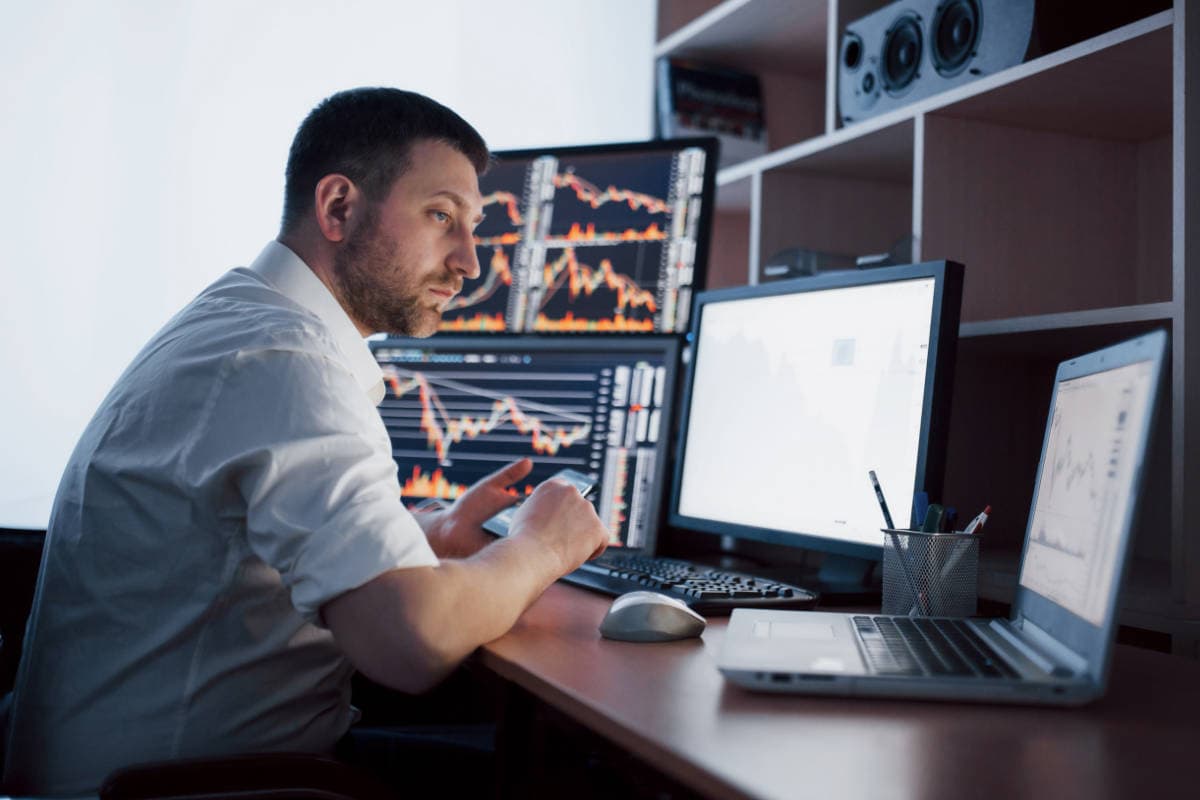
More and more professionals are looking for ways to diversify their income and develop new skills related to financial markets. Among the alternatives that have gained popularity is trading on your own account, a model that allows traders to access capital provided by specialized companies, as long as they demonstrate knowledge, discipline, and proper risk management.
Although this modality may seem attractive to entrepreneurs, freelancers, and people interested in expanding their professional opportunities, it also involves responsibilities and challenges that are important to understand before starting.
Knowing how this system works and what aspects to evaluate when choosing a specialized company is essential for making informed decisions and avoiding unrealistic expectations.
What is trading on your own account?
Trading on your own account is a model through which a company allows traders to operate in the financial markets using capital provided by the organization itself, instead of exclusively investing personal funds.
Unlike traditional trading, where each person completely assumes the risk of their money, in this scheme the trader usually first goes through an evaluation process. If they demonstrate that they can follow a consistent strategy and manage risk appropriately, they gain access to a funded account under specific conditions.
This model, also known as prop trading, has sparked interest among those wishing to develop a career as a trader without needing a large initial capital. However, access to financial resources often comes with specific rules related to maximum allowable losses, profit targets, and operational discipline.
How does this model work?
While each company sets its own policies, the general functioning usually follows a similar structure.
First, the applicant participates in an evaluation designed to measure their skills as an independent trader. During this stage, they must demonstrate that they can apply a coherent strategy, control emotions, and adhere to previously established risk limits.
Once the evaluation is passed, the trader receives access to a funded account to carry out trades according to the conditions defined by the company. If they achieve positive results and comply with the established rules, they can normally receive a portion of the profits generated.
It's important to understand that success within trading on your own account does not solely depend on identifying good market opportunities. It also requires maintaining responsible capital management, controlling impulsiveness, and adapting to different volatility scenarios.
For this reason, many people consider this activity as a continuous learning process rather than an immediate source of income.
Advantages of trading on your own account
The growth of prop trading can be attributed to a series of benefits that may be attractive to various professional profiles.
Access to greater capital
One of the main attractions is the possibility of trading with resources greater than what many traders could allocate initially.
This allows for the development of strategies that would otherwise be limited by available capital.
Reduced exposure of personal assets
Although participating in evaluation processes often involves certain costs, many companies offer the possibility to trade with the organization’s own funds once the corresponding tests are passed.
As a result, direct risk to personal assets may be lower than in other investment models where all capital belongs to the trader.
Development of financial discipline
Beyond the potential financial return, trading requires the development of skills that are also valuable for entrepreneurs and business owners.
Among them, the following stand out:
- risk management;
- emotional control;
- data-driven decision making;
- strategic planning;
- adaptability.
These competencies can also be applied in business management and entrepreneurial projects.
Flexibility to work from anywhere
Thanks to the advancement of digital platforms, many traders can carry out their activities from various locations, as long as they have internet access and a suitable environment to concentrate.
This flexibility is especially attractive for professionals used to remote or hybrid work.
Risks and challenges to be aware of
While there are obvious advantages, it is also important to maintain a balanced view of this activity.
Trading on your own account does not guarantee positive results, and requires preparation, patience, and continuous learning.
Emotional management makes the difference
One of the greatest challenges is controlling emotions.
Fear, anxiety, or overconfidence can impact decision making and lead to mistakes that have nothing to do with the strategy being used.
For this reason, many traders believe that trading psychology is just as important as technical knowledge.
Volatility is part of the market
Financial markets are constantly changing due to economic, political, and social factors.
Understanding that volatility is a natural characteristic of the market helps avoid impulsive decisions when unexpected movements occur.
Rules must be respected
Companies involved in prop trading typically set limits related to maximum losses, risk levels, and performance objectives.
Failing to comply with these conditions can prevent further trading, even when the overall strategy is sound.
Discipline tends to be a more determining factor than attempting to achieve quick profits.
Requires ongoing training
Learning never ends.
Analysis tools, market conditions, and technologies are constantly evolving, so staying updated is a part of the daily work of any trader.
What aspects to evaluate before choosing a prop trading company?
Not all organizations offer the same conditions. Before making a decision, it is advisable to analyze different aspects to find an alternative that fits personal goals.
Transparency in conditions
It is advisable to carefully review aspects such as:
- evaluation requirements;
- loss limits;
- profit distribution;
- associated costs;
- withdrawal policies.
Information should be presented clearly and accessibly, avoiding ambiguous conditions.
Technology and platform stability
The quality of trading platforms directly influences the user experience.
A stable, fast, and reliable infrastructure facilitates the execution of trades and reduces potential technical issues during times of high volatility.
Learning resources
Many companies complement their services with educational materials, market analysis, or training content.
These resources can be particularly useful for those who continue to refine their knowledge.
Reputation within the sector
Investigating verified opinions, track record, and industry presence allows for a more comprehensive perspective before selecting a company.
In this context, some specialized platforms such as Supertrade are part of the prop trading ecosystem and provide information about their operating model, evaluation processes, and resources aimed at traders. Analyzing this type of proposal alongside other alternatives allows for comparing conditions and making decisions based on objective information rather than promises of results.
Trading as a skill that also adds value to entrepreneurs
Although many associate trading exclusively with financial investment, the skills developed can be useful in other professional areas.
For example, an entrepreneur accustomed to analyzing risks, planning scenarios, and making data-driven decisions tends to transfer these skills to managing their business.
Moreover, the ability to stay calm under pressure, assess probabilities, and adhere to a strategic plan are qualities that benefit both a trader and a business leader.
From this perspective, learning about trading on your own account not only involves understanding an operating model within financial markets but also strengthens competencies related to analytical thinking, discipline, and efficient resource management.
Trading on your own account: an alternative to participate in financial markets without relying on a large personal capital
Trading on your own account represents an interesting alternative for those who wish to participate in financial markets without solely depending on a large personal capital. However, it also requires preparation, consistency, and a realistic understanding of the associated risks.
Before starting, it is advisable to dedicate time to studying how this model works, enhance knowledge about risk management, and carefully compare the features of different companies in the sector.
Choosing a transparent platform, understanding its rules, and maintaining a learning-oriented attitude can make a significant difference in the long run.
Beyond potential financial results, the true value of trading lies in developing a methodology based on analysis, discipline, and informed decision-making, skills that can also become an advantage for entrepreneurs, professionals, and anyone interested in continuing to grow in an increasingly dynamic environment.