By NOI Coworking Medellín on
What does hybrid remote work mean? Discover its impact on the modern office
Discover what hybrid remote work means and its benefits for employees and organizations. Learn about its features and advantages.
What does hybrid remote work mean
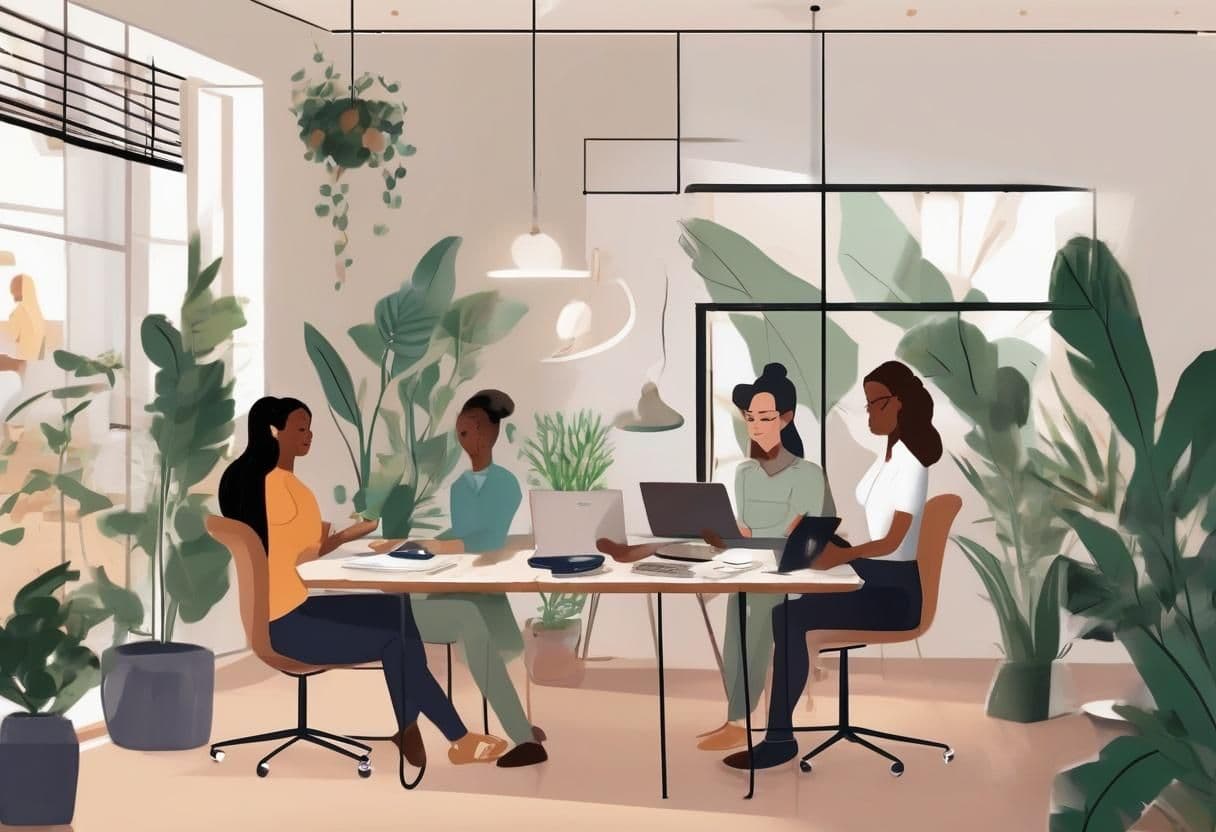
Hybrid remote work refers to a work model that combines the best of both worlds: working from home and the traditional office. In this model, employees can alternate between working in a coworking space, an office, or from their home. This offers flexibility and a balance between work and personal life.
Hybrid remote work is becoming increasingly common due to its numerous advantages, such as reduced commute times and greater control over the work environment. Organizations tend to adopt it to improve productivity and the overall well-being of their employees.
Features of hybrid remote work
This work model is flexible, adapting to the needs of each employee. Some key features include:
- Flexible hours: Employees have the freedom to set their own work schedules.
- Space options: Workers can choose where to perform their job, whether from home, in a coworking space, or in the office.
- Collaborative technology: Digital tools are used to facilitate communication and collaboration in distributed teams.
Advantages of hybrid remote work
Choosing a hybrid remote work model brings multiple benefits:
- Better work-life balance: Employees can manage their time better, which translates into greater job satisfaction.
- Increased productivity: By allowing a work environment that adapts to each individual's preferences, productivity generally increases.
- Cost reduction: Both employees and employers can experience savings on transportation and office expenses.
Challenges of hybrid remote work
Despite its numerous advantages, hybrid remote work also presents challenges:
- Communication: Ensuring effective communication can be challenging when teams are dispersed.
- Time management: Employees may find it difficult to disconnect if they do not set clear boundaries.
- The need for adequate technology: Constant access to tools and digital platforms is required to collaborate effectively.
The future of hybrid remote work
Hybrid remote work is becoming the trend of the future. Many organizations are adapting their work policies to include this modality, observing an increase in employee satisfaction and retention. As companies implement more advanced technologies and develop an adaptive work culture, hybrid remote work will continue to redefine how we understand the modern work environment.
Relationship with coworking spaces
In the context of hybrid remote work, coworking spaces have become particularly relevant. These spaces offer a middle ground between working from home and the traditional office, providing a professional and collaborative atmosphere. Employees can use these spaces for meetings, focus on specific tasks, or simply socialize with other professionals.
Conclusion
In summary, hybrid remote work represents a breakthrough in the way we work. It offers unprecedented flexibility, allowing employees to adapt to their personal and professional needs. With the support of coworking spaces and the right digital tools, this modality will continue to thrive and evolve. Explore more about remote work and its benefits!